
What is Sciatica? Causes, Symptoms, and Treatment
If you’ve ever experienced sciatica, you probably don’t need me to tell you what a pain in the butt it can be…not to mention the leg and the foot!
Sitting, standing, walking, sleeping and even putting on your socks can become a challenge.
The good news is that sciatica is quite common and there are treatment options available. The first step is understanding what’s contributing to your symptoms.
What Is Sciatica?
You may be surprised to learn that sciatica is not actually a diagnosis. Instead, it’s an umbrella term used to describe symptoms that occur along the path of the sciatic nerve.
This nerve travels from your lower back, through your buttock, and down your leg.
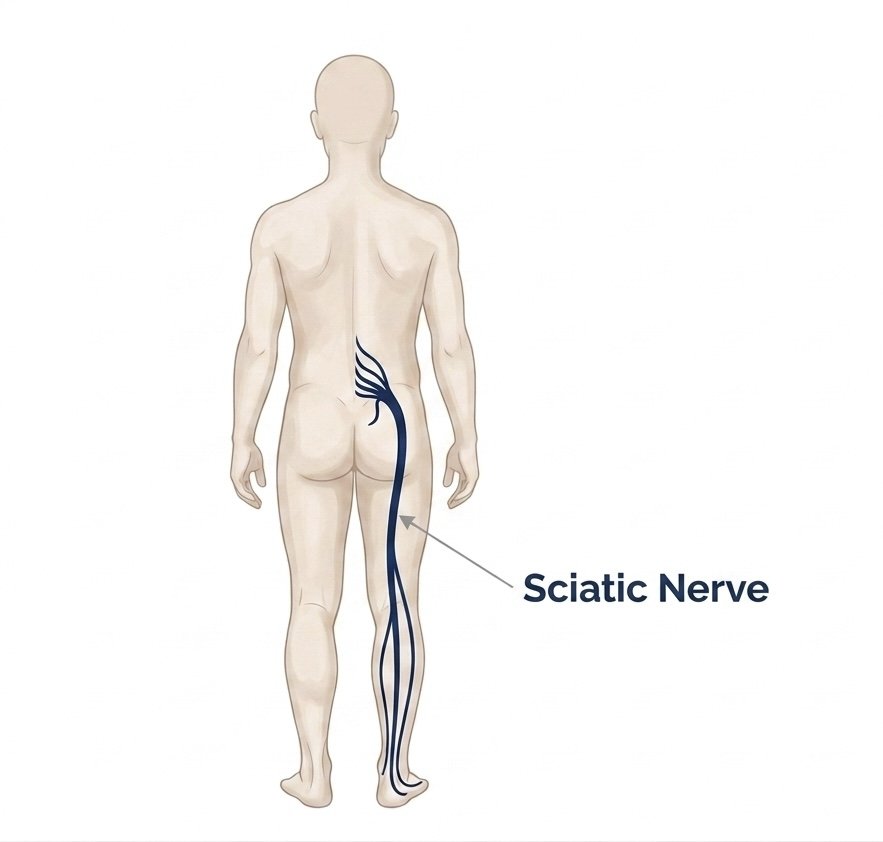
When the sciatic nerve becomes irritated, it’s common to experience some of the following symptoms:
Pain that travels down the leg
Tingling or pins and needles
Numbness
Burning sensations
Weakness in the leg or foot
Not everyone experiences sciatica the same way. Some people have mild symptoms that come and go, while others experience more severe symptoms that affect every aspect of their lives.
What Causes Sciatica?
As we discussed earlier, sciatica isn’t actually a diagnosis. It’s a term used to describe symptoms that occur when the sciatic nerve becomes irritated.
That irritation can happen for a variety of reasons. Sometimes it may be related to changes in the lower back. Other times, surrounding tissues can place pressure on the nerve.
This is why two people may both have “sciatica” but for very different reasons.
How Physiotherapy Can Help
Because sciatica can have different causes, it’s important first to discover what’s contributing to your symptoms.
A physiotherapy assessment can help identify the cause and determine which treatments are most appropriate for you.
Some common treatments may include:
• Education about your condition
• Advice on modifying activities that aggravate your symptoms
• Specific exercises to improve mobility and strength
• Strategies to help you return to activities that are important to you
If you’re dealing with sciatica, remember that the symptoms themselves are only part of the story. Understanding what’s contributing to them is often the first step toward feeling better.